Ubair Javaid is a digital asset, DLT, and tokenization expert with a track record of building infrastructure that solves real enterprise problems. As ...
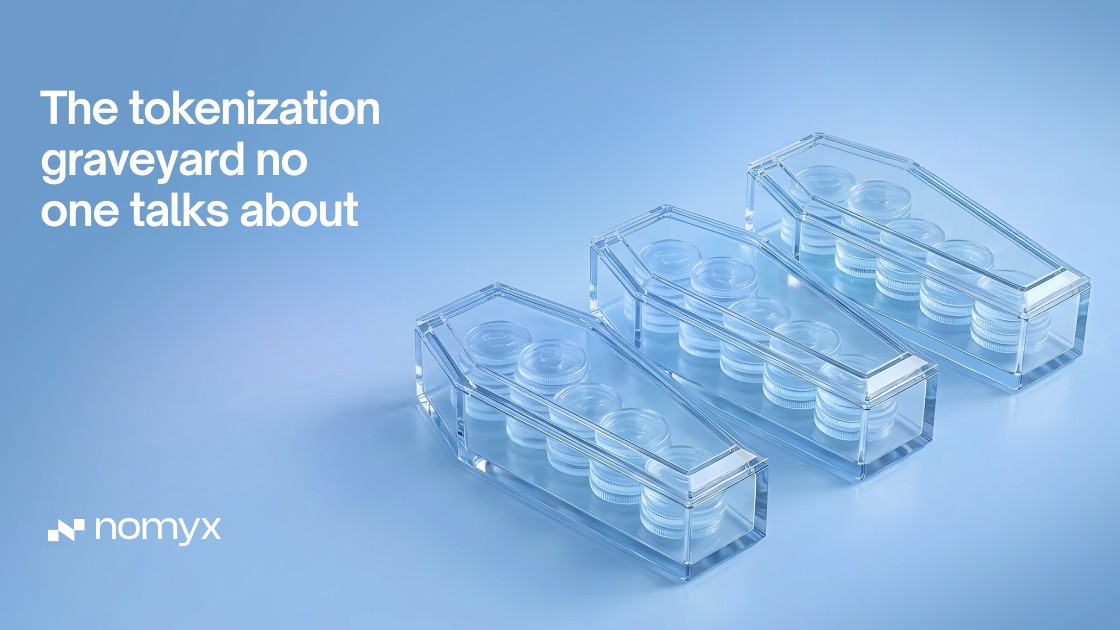
There is a graveyard of tokenization deployments that the industry does not discuss openly. Every fund that abandoned one hit the same wall at the same point. The token was issued, the asset was on-chain, and nothing in the existing operational stack connected to it. This guide explains why real-world asset tokenization deployments fail and what the right infrastructure looks like.
Nomyx is institutional tokenization infrastructure for asset managers, built integration-first so that fund accounting, transfer agent connectivity, investor onboarding, and compliance verification all run in the same workflow as the token itself.
Key Takeaways
- Most tokenization deployments fail after issuance, when the token cannot connect to the fund's existing operational infrastructure. - The integration work that follows a failed deployment consumes the ops team, the legal team, and the budget the project was supposed to save. - Fund accounting systems, transfer agents, cap table software, and investor portals were not built to receive tokenized assets, and most vendors leave the fund to discover that after signing. - The right tokenization infrastructure is built integration-first, with every operational layer connected to the token from day one. - The sales cycle for tokenization infrastructure is longer than it should be because institutional decision makers carry a very specific memory of what failed deployments look like in practice.
What Is a Tokenization Deployment
A tokenization deployment is the full process of taking a fund or asset from traditional infrastructure to an on-chain environment where tokens represent ownership, compliance is enforced automatically, and operational workflows run without manual intervention. Tokenized funds across private equity, private credit, and alternative assets all require the same full stack to operate compliantly.
A complete tokenization deployment covers all of the following:
1. Token issuance connected to a compliant investor identity layer 2. Fund accounting integration that updates in real time at every capital event 3. Transfer agent connectivity that processes ownership changes automatically 4. Investor onboarding with KYC and AML enforced at the token level 5. Compliance verification built into every transfer without manual intervention 6. Secondary market connectivity with controlled transfer rules and buyer eligibility checks 7. An immutable audit trail generated automatically at every transaction
The real test of a deployment is everything that comes after the token is issued, and whether all of the above actually work together in a live fund environment or get handed back to the ops team to figure out.
Why Do Tokenization Deployments Fail
Most tokenization deployments fail after issuance, and that is the part the industry does not talk about. The token is issued, the asset is on-chain, and then the fund tries to connect it to the infrastructure that actually runs the business. Nothing works together.
The fund accounting system has no integration path, the transfer agent operates on a completely separate stack, and the cap table software cannot receive on-chain ownership updates. By the time the fund has closed those gaps, the project has already become another entry in the tokenization graveyard that sits alongside the real estate funds and private credit vehicles that moved early and paid the price.
What the Integration Graveyard Actually Looks Like
The integration graveyard is real, and it is a pattern that repeats across funds that explored tokenization early, committed to a vendor, and discovered the integration was their problem to solve.
The vendor had delivered what they sold, a tokenization layer, and everything else was outside their scope. The vendor sold a token, but the fund needed infrastructure. By the time the fund understood that, the vendor had moved on and the fund was left with a failed deployment, a significant write-off, and a compliance function that now carries a very specific institutional memory about what tokenization actually looks like in practice.
Why That Memory Is Shaping the Market Today
That institutional memory is one of the primary reasons the sales cycle for tokenization infrastructure is longer than it should be for technology that works. The fund managers evaluating vendors today are often the same people who lived through a failed deployment, or who know someone who did.
They are asking harder questions, moving more slowly, and requiring more proof before they commit. That is the right response, and it is creating a higher bar for every vendor in the market.
What Questions Should a Fund Manager Ask Before Signing a Tokenization Vendor
The question every fund manager should be asking is whether the platform was built to integrate with the infrastructure they already run, or whether integration is something they will discover is their problem after the contract is signed. These are the specific questions that reveal the answer:
Does the platform connect natively to existing fund accounting systems or does it require a separate reconciliation process?
Does it integrate with the fund's transfer agent or does the transfer agent have to build their own connection?
Does the investor portal show real-time on-chain positions or does it rely on manual updates?
Does compliance verification happen at the token level automatically or does someone on the ops team run it manually after every transfer?
Can the vendor produce a live deployment reference who will take a call and answer all of the above?
The answers tell you more about the vendor's architecture than any technical document they will send over. For a deeper look at evaluating your options, read:How to Choose a Tokenization Platform.
What Integration-First Infrastructure Actually Means
Integration first digital asset infrastructure means the tokenization layer was built from the beginning to connect with every operational system that runs a fund. Fund accounting, transfer agent connectivity, investor onboarding, and compliance verification all run in the same workflow as the token itself.
When a subscription comes in on Nomyx, it flows through KYC verification, fund accounting, and token issuance in a single automated sequence. When a capital call goes out, investor responses, compliance verification, and fund accounting all update together, and nothing requires a separate reconciliation step because nothing is disconnected.
How to Verify Integration Claims Before You Sign
A vendor who claims integration-first infrastructure should be able to demonstrate it before any commitment. Ask for a live deployment reference and speak directly with the fund administrator at that deployment.
Ask how the fund accounting integration works in practice. Ask whether the transfer agent required a custom connection. Ask what reconciliation looks like at the end of the month. If the vendor cannot produce a reference who can answer those questions, the claim is unverified, and the risk is real.
Conclusion
The tokenization graveyard exists because most vendors solved the issuance problem and handed the integration problem to the fund. The funds that avoided it chose infrastructure where every operational layer was connected from day one.
Nomyx was built that way, the fund accounting, the transfer agent, the onboarding, and the compliance all move when the token moves. The conversation starts with a live sandbox at nomyx.io
FAQ's
Why do tokenization deployments fail?
Tokenization deployments fail when the token cannot connect to the fund's existing operational infrastructure after issuance. Most vendors leave the fund to solve that integration problem after signing.
What is the tokenization integration graveyard?
The tokenization integration graveyard refers to failed deployments where funds discovered the integration was their responsibility after signing, and abandoned the project after consuming significant ops, legal, and budget resources.
What should a fund manager ask a tokenization vendor before signing?
Ask whether the platform connects natively to your fund accounting system, integrates with your transfer agent, shows real-time on-chain positions, and enforces compliance automatically at the token level. Ask for a live reference who can verify all of it.
What does integration-first tokenization infrastructure mean?
Integration first means the tokenization layer was built to connect with fund accounting, transfer agents, investor onboarding, and compliance verification in a single workflow, so funds deploy on infrastructure where every layer already works together.
How do you verify a tokenization vendor's integration claims?
Ask for a live deployment reference and speak directly with the fund administrator. Ask how fund accounting integration works in practice, whether the transfer agent required a custom connection, and what reconciliation looks like at month-end.